

Each year, we get inundated with requests from digital fundraising looking for support with their digital campaigns, so we’ve pulled this list together to help you get those little duckies lined up.
1. Performance Tracking
Don’t fly blind into the giving season. Be crystal clear on what each campaign is supposed to achieve – whether it’s one-off donations, recurring donors, or sign-ups. Set up conversion goals across all your ad platforms and ensure you’re measuring what matters (if you can’t measure it, you can’t improve it). This means double-checking that your Meta Pixel and Google Analytics (GA) tracking are firing correctly, with donation values, types (monthly vs one-off vs shop) and volumes being recorded. (And if you operate in a sensitive cause area, note that Meta has new Pixel data-sharing restrictions that might affect your tracking).
It’s worth the effort to get a reporting dashboard in place for the campaign period. Whether you use Looker Studio (formerly Data Studio) or the built-in GA reports, a dashboard will let you spot trends at a glance. You’ll quickly see which ads or channels are crushing it and which are underperforming. This way, you can pounce on opportunities to scale up or tweak anything that’s not working before the year-end rush is over.
2. Mobile First
With mobile giving on the rise (nearly half of online donations now come from mobile devices – sometimes as much as 80/90% if looking only at paid media channels), you need to think mobile-first in everything you do. Ensure the following are in place:
- Fast, mobile-optimised landing pages: If your donation page loads slower than a sloth eating its breakfast, mobile users will bail. Keep pages lightweight and tested on smartphones.
- Mobile-friendly creative assets: Design your images/videos with small screens in mind. Text should be readable on a phone and visuals should grab attention even on a 6-inch display.
- Frictionless donation flows: Make giving on mobile ridiculously easy. This could mean offering Apple/Google Pay, SMS donation options, or simply a short and sweet donation form. Fewer clicks and scrolls = higher conversion rates. Many modern donation processing solutions (think FundraiseUp, GiveEasy, Raisely, Funraisin) offer these payment wallets “out of the box” so you don’t need to pull your hair out trying to get things set up.
Remember, if donors have to pinch-zoom or jump through hoops on their phone, they’re likely to drop off. Remove any roadblocks for your on-the-go supporters (again on-the-go supporters will be the vast majority of your social media traffic).
Many modern donation processing solutions (think FundraiseUp, GiveEasy, Raisely, Funraisin) offer payment wallets “out of the box” so you don’t need to pull your hair out trying to get things set up.
3. Creative That Converts
In the world of digital ads, creative isn’t just king – it’s the whole kingdom. In fact, research shows that about 50% of a campaign’s performance comes down to the quality of the creative. Translation: the images and messages you serve up matter a lot. To make your year-end campaign ads effective, your creative must:
- Stop the scroll: Your ad needs to grab attention in the first second. Bold imagery, vibrant colours, or a provocative headline can make a donor pause their thumb.
- Hold attention (even briefly): It’s one thing to catch their eye, but can you keep it? Consider short, punchy videos or carousel images that tell a quick story to keep people engaged for a few precious seconds.
- Inspire action: Include a clear ask in the creative. Whether it’s “Donate Now to Save a Life” or “Join Us in Making a Difference,” make sure the viewer knows exactly what you want them to do right now.
When brainstorming and testing new ad creatives, always start with a hypothesis. For example, “We believe a donor story video will outperform a static image for our middle-aged supporter segment.” Then test it! Tailor your visuals and messaging to different audience segments as much as possible – what resonates with a first-time young donor might not work for a long-time supporter. And don’t be afraid to have fun with it; authentic, standout creative is your ticket to better results.

4. Audience Targeting
Not all donors are the same, so don’t treat them that way in your targeting. Use what you know about your audience to segment and target thoughtfully. For instance, you might create separate audience groups for past donors, newsletter subscribers, event attendees, and lookalikes of your best donors. The more relevant your ads are to each group’s interests or behaviours, the better they’ll perform.
What’s more, these audience groups based on actual support data (AKA custom audiences) are super useful for building lookalike audiences.
Also, keep an eye on those fancy AI-driven campaign optimisations. Algorithmic bidding can be great, but it often over-targets your existing supporters (since those folks are more likely to convert again). To grow new donor acquisition, use exclusion lists to filter out current donors from your prospecting campaigns. In other words, tell Facebook/Google not to show your “New Year-End Campaign” ads to people who have already given this year. This way, the AI can go find fresh eyes, and you’re not paying to show ads to Grandma who donated last week (she’ll get your re-engagement emails instead). We’re not saying don’t EVER target existing donors, but just make sure you’re sculpting your campaigns so you have transparency over who the platforms are and are not targeting.
5. Storytelling That Builds Trust
Today’s donors expect more than a pretty picture and a passionate plea – they want proof. According to nonprofit industry trends, funders (and donors) now look for evidence of impact and alignment with their values. In plain English: people are more likely to give when they trust that their donation will make a real, measurable difference for a cause they deeply care about.
How do you build that trust? Storytelling + data. Share authentic stories of individuals or communities that have been helped by your cause, and pair those stories with tangible results. For example, instead of just saying “We run a food program for families,” try “Last year, we helped 500 families put food on the table – including Sarah’s family, who we supported after job losses. Today, Sarah is back on her feet and even volunteering with us.” See the difference? You’re showing heart and impact. This combination of emotional narrative and real results will assure potential donors that their year-end gift will truly make a difference.
6. Clear Calls to Action
When it comes to calls to action (CTAs), consistency is key. From the moment someone sees your ad to the moment they hit your donation page, the CTA should be loud, clear, and the same. If your Facebook ad says “Donate Now,” then your landing page should prominently say “Donate Now” as well – not “Submit” or “Continue” or something vague like “Learn More.” Donors (like many people) have short attention spans (especially amid Christmas holiday shopping and the multitude of charity appeals that they might be exposed to), so make the action you want them to take blindingly obvious.
A few pro tips for CTAs: Use action-oriented language (“Give Clean Water Today” or “Help Save Lives Now”), and make sure the CTA button on your page stands out visually (big, contrasting colour, above the fold). Every step of the journey should funnel them toward that donation click without confusion. Consistency builds momentum – and momentum leads to conversions.
7. Donation Experience
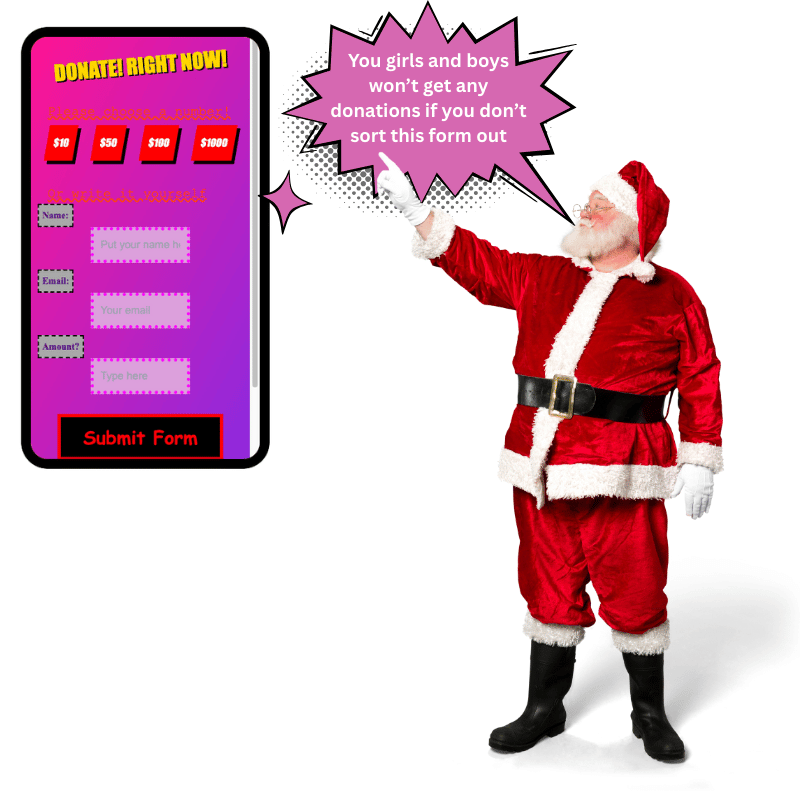
Imagine you’ve convinced someone to donate – awesome! Now don’t lose them with a clunky donation process. A smooth donation experience can make the difference between completed gifts and abandoned carts (yes, people abandon charity forms too). So many charities out there do a great job of generating engagement, telling the story only to put make a supporter jump through hoops to actually enter their payment details. To optimise the giving experience:
- Simplify the form: Ask only for information you truly need. Each extra field (middle name, title, how-did-you-hear-about-us, date of birth, inside leg measurement etc.) is an opportunity for the donor to give up. Keep it short and user-friendly – think about why you really need the data you’re asking for (or are you just getting the information your database team dream about but killing conversion at the same time?!).
- Offer multiple payment options: Different donors prefer different payment methods. Wherever possible, include credit/debit card, PayPal, and mobile wallet options like Apple Pay or Google Pay. The easier it is to pay, the more likely you’ll get the money. Again, most modern payment solutions offer these “out of the box”.
- Display trust signals: Reassure donors that their transaction is safe and their money will be used wisely. Featuring security badges (SSL, PCI compliant logos) and small logos of trusted partners or charity accreditations can boost confidence. Even a brief testimonial or quote like “I love how transparent [Your Charity] is with donations – Jane D.” on the form can reinforce trust.
Also, double-check that everything works on mobile (see #2 Mobile First above). A seamless, fast checkout experience will prevent second thoughts and ensure donors hit that “Confirm Donation” button happily.
8. Test, Optimise & Scale
Even the best plan needs tweaking once the real-world data rolls in. Embrace a test-and-learn mindset throughout your year-end campaigns:
- Start with clear KPIs and budgets: Know your key metrics (CPA, ROAS, donation volume, etc.) and set aside a budget specifically for testing different ideas. If you’re testing a new ad creative or audience, label it and allocate funds so you can measure it separately.
- Be patient with optimisation: Algorithms (and people) need time to react. Don’t declare a campaign a failure (or a winner) in 24 hours. Let your tests run long enough to gather meaningful data – a general rule is to wait until you have at least a few dozen conversions per variant, if possible, before judging. In other words, don’t quit too soon on an experiment; give the machines time to learn and give yourself enough sample size to make decisions.
- Balance funnel stages: Year-end fundraising isn’t just about one Facebook ad or one email. Mix your tactics across the funnel. For example, run Google Search ads to capture people actively looking to give (bottom-funnel), but also run social media or display ads to stir up interest and remind folks of the cause (upper-funnel). Often, donors need to see your message a few times in different places before they act. A balanced approach ensures you’re both catching the ready donors and cultivating the maybes.
When something does work, be ready to scale it up (increase budget, expand the audience, etc.) to capitalise on the momentum. And if something consistently flops, don’t be afraid to cut it and reallocate resources to the winners, especially as December 31st creeps closer.
9. Budget Wisely
It’s tempting to spread a small budget across every shiny digital platform – but resist that urge. Your mantra should be: focus and invest. Make sure each campaign has enough budget to yield statistically significant results; a too-small budget can lead to muddled data and missed opportunities. It’s far better to run a few channels or campaigns really well than to be a Jack-of-all-trades, master of none.
Think of your budget as fuel in a car. If you put just a cup of petrol in 10 cars, none of them will likely reach the finish line. But pour that same amount into 2-3 cars, and you’ve got a real shot at going the distance. So, identify which channels have historically given you the best return (or where your target donors hang out the most) and fund them properly for this critical period. In short: don’t be penny-wise and pound-foolish with year-end fundraising. Allocate enough spend to learn and earn – your future self (and finance team) will thank you. Fact: most nonprofits in Australia should be focused on getting just 2 channels to work before they broaden their horizons!
10. Donor Stewardship/Donor Love
Finally, remember that a donation isn’t the end of the journey – it’s the start of a relationship. A new donor is far more likely to give again if they’re thanked promptly and genuinely. Don’t neglect the design and delight of your thank-you page; it should make donors feel awesome the moment after they give (“You’re a hero! Thank you for helping children in need – check your email for a personal message from our team”). And definitely have a thank-you email or SMS ready to fire off within the first 24-48 hours after the donation. Studies show that prompt, personalised thank-yous can dramatically improve donor retention – one analysis found first-time donor retention rates jumped from 18% to 38% when thank-yous were sent within 48 hours.
So, set up that automated thank-you message, but make sure it feels human. Use the donor’s name, reference their specific contribution if possible (e.g. “Your $50 is already hard at work…”), and express sincere gratitude. If appropriate, tease the impact their gift will have (“we’ll update you next month on the families you’ve helped”). By making donors feel valued right away, you increase the chances they’ll stick around long after New Year’s.
By following this checklist and getting your digital strategy right, you can not only maximise year-end donations but also lay the foundation for long-term supporter relationships. Here’s to ending the year on a high note – happy fundraising!
Need some assistance from Santa's Ninja helpers?
Get in touch with a Ninja and we’ll help you plan and execute your end of year digital fundraising campaigns.