

A common challenge is that nobody really enjoys the topic of “end of life” planning – it’s kind of a necessary evil that people need to undertake in order to ensure an orderly transition once they’re no longer around to manage things.
Gifts in Wills has become an increasingly important source of income for charities. According to a report by Smee & Ford, the number of bequests made in the UK alone has increased by 67% over the past decade, and Gifts in Wills now represent over £3 billion (AUD$5.6bn and USD$4.1bn) of income to the sector each year.
Gifts In Wills Income by Country
(note: log scale due to size of US GiW market)

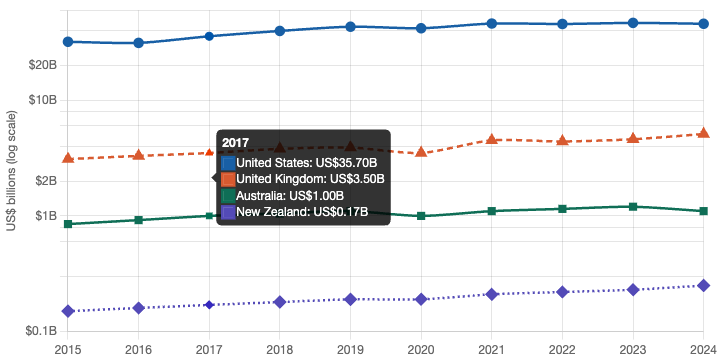
All values converted to US$ billions using approximate annual average exchange rates for comparability. Underlying source-currency totals: US (Giving USA, $ billions), UK (Smee & Ford / Legacy Futures, £ billions), AU (JBWere Bequest Report & ACNC, A$ billions), NZ (JBWere Aotearoa Bequest Report & Public Trust, NZ$ billions). Country totals are not strictly methodologically identical — US figures cover estate-based bequests via Giving USA modelling, UK figures reflect charity-reported legacy income via Charity Commission accounts, and AU/NZ figures are JBWere estimates blended with ACNC/Public Trust data.
A whole segment of people are now nearing the age at which they’re meeting two criteria:
- Starting to seriously think about end of life planning
- Digital native – this is the most important point. People in the age range 40-60 have mostly had access to computers for a large part, if not all of their career. Making them much more likely to be reachable via digital communications.
The two factors above mean that reach and generating leads from potential Gifts In Wills donors via digital channels is now more achievable than ever – indeed the team at Digital Ninjas are seeing a large number of charities already seeing serious success in this area.
Targeting the Right Audience
Research has shown that people who have experienced major life changes are significantly more likely to update their will and include a charity. Estate planning is rarely an impulse decision; it is triggered by shifts in personal circumstances. Charities should consider targeting their marketing efforts towards individuals experiencing these specific milestones:
- Marriage or Divorce: Getting married often invalidates existing wills, while a divorce requires a complete reassessment of asset distribution. Both events force individuals to re-engage with estate planning.
- Having a Child: The birth of a child is one of the strongest triggers for will writing, driven by the immediate need to appoint legal guardians and secure the child’s financial future.
- Retirement or Health Changes: Transitioning out of the workforce or experiencing a health scare often prompts deeper reflections on legacy and how one wants to be remembered.
In addition, targeting individuals who have previously donated to the charity or have a strong affinity with its cause can be an effective strategy. Charities can use data analytics to identify potential donors based on factors such as age, income, and giving history (e.g., long-term consistent givers often make better legacy prospects than one-off major donors). They can also use surveys and focus groups to gain insights into donors’ motivations for giving and their attitudes towards legacy giving.
Value Exchanges to Encourage Personal Details
Once the target audience has been identified, charities can offer value exchanges to encourage potential donors to leave their personal details with the charity. Because estate planning is sensitive, the value offered must build trust and provide genuine utility.
This can include:
- Educational Resources: Providing a downloadable “Free Guide to Writing Your Will” or an “Estate Planning Checklist.”
- Subsidised Services: Partnering with legal networks to offer supporters a free or discounted simple will.
- Exclusive Support: Offering exclusive events, webinars, or providing personalised support from a dedicated legacy officer.
Charities can also use digital tools such as quizzes, interactive videos, or virtual events to engage potential donors and gather their personal details. These digital experiences can be tailored to the interests of the target audience and can offer valuable insights into their preferences and behaviours.
The most effective value exchange will depend on your cause, the type of audience we’re reaching and the stage of the decision making process they’re in when it comes to leaving a charitable gift in their Will (in our experience, most of the potential donors you reach online will be fairly early stage in that they’re creating their Will for the first time).
Digital Marketing Channels and Platforms
We’re at this crucial tipping point of a large numbe of prospects for Gifts In Wills now using, and using digital platforms regularly.
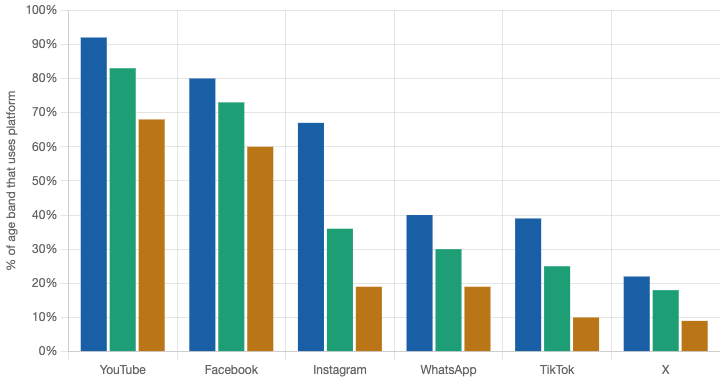
Source: Pew Research Center “Americans’ Social Media Use 2025” (NPORS survey of 5,022 US adults, Feb-Jun 2025). Figures are percent of adults in each age band who report ever using each platform. 50-64 and 65+ values for some platforms (WhatsApp, X, TikTok daily-use proxy) are interpolated from Pew’s age cross-tabs and supplementary Marketing Charts coverage of the same dataset. Note: this is US data — Pew is the most methodologically rigorous publicly available source for platform × age cross-tabs. Globally comparable age-banded data is published by GWI and DataReportal but mostly sits behind paywalls; directional patterns (YouTube/Facebook dominate older bands, Instagram/TikTok skew young) hold consistently across markets.
So we know our audience are playing there, lets take a very quick look at how to reach and engage them…
Social media platforms such as Facebook, Instagram, and Twitter can be used to target specific demographics and interests, and to promote digital content such as blogs, videos and infographics.
Once youv’e captured the prospects details then you need to build rapport with them Lead nurture joureys can be used to buildtrust with potential Gifts in Wills donors over time. Legacy giving is a deeply considered decision, so consistent, respectful engagement is key. Once a supporter shares their details, charities should use a mix of channels to stay connected, these might include email journeys that provide helpful information and impact stories, direct mail packs that reinforce credibility, and telefundraising to offer a more personal, human touch. These channels work best when integrated into a cohesive journey, where each interaction builds confidence and answers questions. The goal is not to push for a quick conversion, but to remain relevant and supportive as donors move through their decision-making process. Effective lead nurturing ensures that when someone is ready to update their will, the charity is front of mind and trusted
Email marketing is another effective strategy, allowing charities to segment their database and send personalised messages to potential donors. Charities can also use search engine marketing (SEM) to target individuals who are actively searching for information on legacy giving or related topics.
The type of creative and messaging that appeals to potential donors will depend on the platform being used and the target audience. For example, social media platforms are best suited to shorter, visually engaging content that can capture attention quickly. Video content is becoming increasingly popular on social media and can be an effective way to communicate complex ideas in a simple, engaging format.
In contrast, email marketing allows for longer, more detailed messaging and can include personalised stories and case studies to inspire potential donors. SEM campaigns can use targeted keywords and ad copy to appeal to individuals actively searching for information on legacy giving.
Examples of Effective Campaigns
One example of a successful Gifts In Wills campaign is the British Heart Foundation’s “Free Will Service”. This campaign offered supporters over the age of 55 the opportunity to have their will written or updated for free by a solicitor. In exchange, the charity asked supporters to consider leaving a gift in their will to the British Heart Foundation.
The Free Will Service was promoted through a mix of digital channels including social media, email marketing, and SEM. The messaging focused on the emotional impact of leaving a legacy gift and the opportunity to make a lasting difference to the fight against heart disease. The campaign generated over 35,000 leads and resulted in over £10 (AUD$18.8 and USD$13.6) million in pledged gifts.
Another effective campaign was run by the RNLI, which used personalised video content to engage potential Gifts In Wills donors. The campaign, called “My Perfect Storm”, targeted individuals who had previously donated to the charity and were known to be interested in legacy giving. The campaign used data from the charity’s database to create personalised videos for each individual, highlighting the impact of their past donations and encouraging them to consider leaving a legacy gift. The personalised videos were promoted through email marketing and social media, with targeted messaging and calls to action. The campaign resulted in a 23% increase in Gifts In Wills leads and a 35% increase in pledged gifts.
UNICEF opted for a nostalgia-inducing angle, offering people the ability to enter their name and year of birth to create a personalised video featuring events that illustrate the impact of UNICEF during their upbringing.


Key Takeaways
Generating leads for Gifts In Wills donors requires a targeted and personalised approach, using a range of digital marketing channels and platforms. To be effective, charities must:
- Identify the audience most likely to be predisposed to leaving a legacy gift, based on factors such as major life changes, previous donations, and affinity with the charity’s cause.
- Offer value exchanges to encourage potential donors to leave their personal details, such as educational resources, exclusive events or personalised support from a legacy officer.
- Use digital marketing channels and platforms such as social media, email marketing, and SEM to reach potential donors and promote engaging content tailored to their interests.
- Use targeted messaging and calls to action that appeal to the emotional motivations behind legacy giving and highlight the impact of leaving a lasting gift.
Generating leads for Gifts In Wills donors is a crucial strategy for charities looking to secure long-term financial stability. By targeting the right audience, offering value exchanges, and using effective digital marketing channels and platforms, charities can engage potential donors and inspire them to leave a lasting legacy. As more people recognise the importance of legacy giving, charities that invest in these strategies are likely to see significant returns in the years to come.
Need help with leads for your Gift in Will program? Talk to a Ninja today.
The Ninjas are ready and waiting to help you with your tracking questions.